SAMPLE TRACKS
THE POETRY WIZARDS GREATEST HITS
Explore a curated collection of audio moments—designed to inform, inspire, and engage. Whether you're here to learn, reflect, or just enjoy, my songs offer something for every listener. These sample tracks are 45 - 75 seconds, you can buy the full versions below the sample tracks. Scroll down!

SAMPLE TRACKS
Shop
Shop
Filters

This piece I wrote years ago and pulled it from my poetry journals, then sculptured it into this powerful song that I am so proud of writing. This song is an empowering anthem about resilience, self-determination, and the transformative power of music as both personal expression and collective inspiration. The central figure—a woman who "lurks over the shadows" with "strength and beauty"—embodies someone who has overcome adversity and now stands as a beacon of possibility for others. The recurring image of standing tall while "the sky never leaks" suggests an unshakeable inner strength, a refusal to let hardship penetrate or diminish one's spirit. There's an optimistic, forward-momentum philosophy throughout: "I only see forward and never look back," "a little less today, a little more tomorrow," "for every doubt, there's a shout"—all pointing toward incremental progress and the choice to focus on growth rather than dwelling on the past. I wrote the lyrics in a way to fit into the music as a tool and be used as a liberating force, something that can "set you free" and shake people "from your seats," suggesting art as both awakening and a call to action. The bridge's acknowledgment that "in the game of life, we all have a part" broadens the message from personal triumph to collective empowerment—this isn't just a personal story I lived but an invitation for everyone to embrace their role, excel, and find their own courage. It's ultimately a rallying cry for authenticity, perseverance, and using your voice to inspire others. Most of my songwriting is of this nature; It’s deep, it’s from the heart, but most importantly, it’s all been lived and true! It’s what I am and always will be. “A man that can, and a wizard that will”! This track is pure inspiration — the feeling of pushing through closed doors, setbacks, and doubts until you finally break through. It’s about refusing to fold, refusing to shrink, and choosing to stand tall no matter what tries to knock you down.
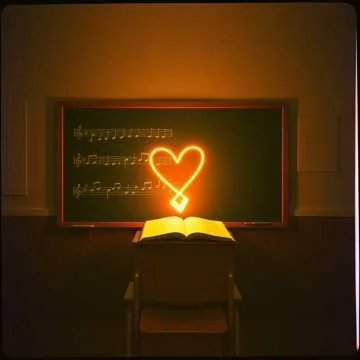
This song is a romantic, dreamy narrative about falling deeply in love with my English professor, blurring the lines between academic instruction and emotional/romantic education. The "lessons" become layered metaphors: she literally teaches subjects like history and economics, but more profoundly, she gave me a lesson, unintentionally, of course, about love, desire, connection, and self-discovery ("she opened the book in my heart"). There's an intoxicating, almost obsessive quality to the attraction—she occupies my dreams, waking thoughts become "hazy blur[s]," and with a fire and rhythm inside me that only she can satisfy. The imagery mixes the academic (chalk on the board, classroom) with the sensual and spiritual (flame, candlelight, fireworks, church), creating a romance that feels both grounded in real encounters and elevated to something transcendent. Eventually, I felt this love as fate, something so profound that I even consulted my preacher about it, suggesting that these feelings inside of me seemed like almost sacred experiences. Ultimately, it's about transformative love that awakens creativity (my poetry), passion, and a sense of purpose, with the song itself becoming my declaration and tribute to her impact on my life. Lunches turned into coffees, coffees into dinners, and weekends… well, the rest writes itself. This track is about that unexpected chapter and the lessons it taught me. “A chapter written in heat and surprise.” WILLIAM MACRIS
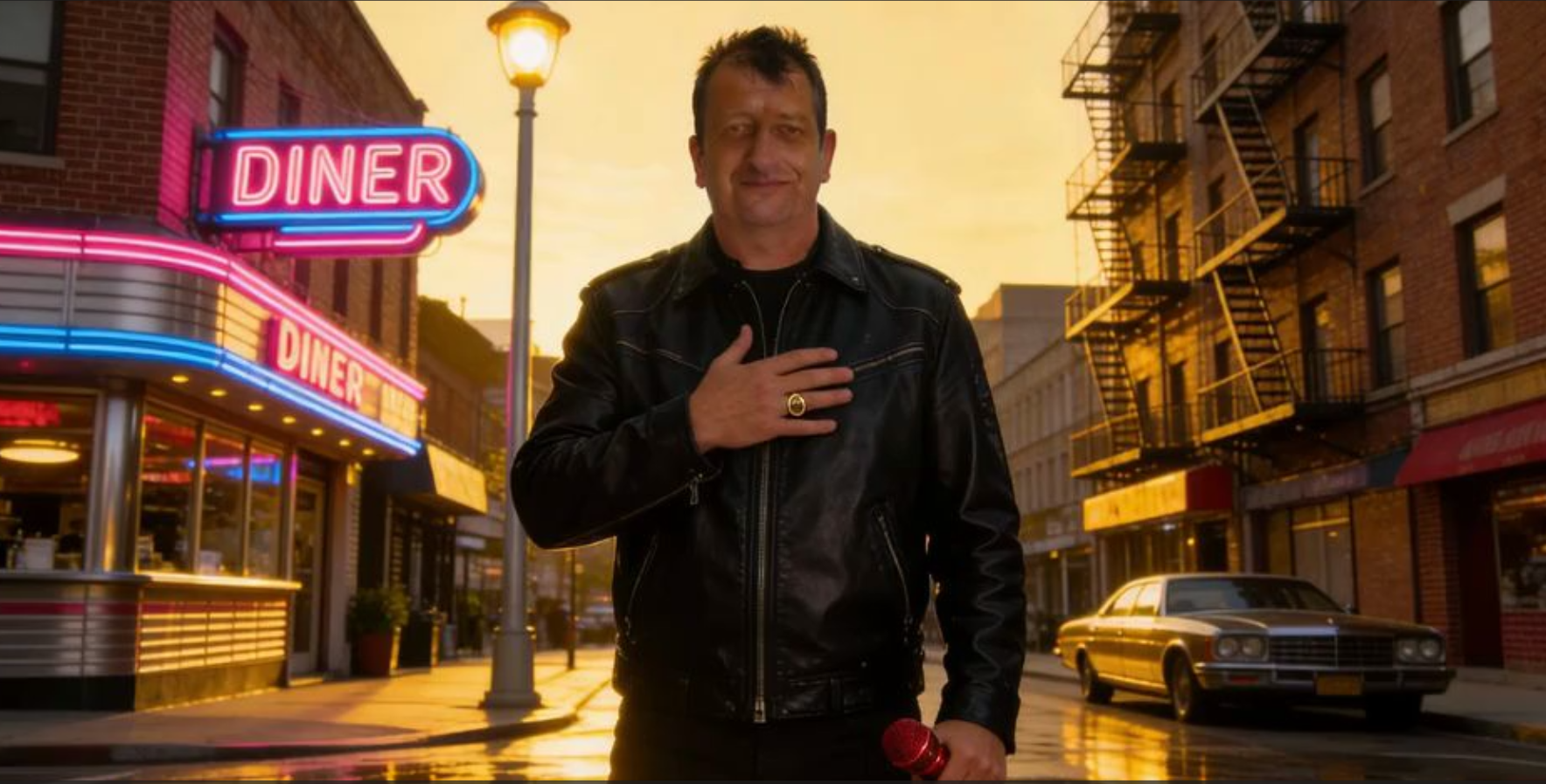
This one is my declaration, “BILLY MAC” is about the grind, the climb, and the promise I made to myself to never stop searching, scratching, and rising. As long as I’m breathing, I’m moving forward — this track is the sound of that determination. This song is an autobiographical anthem about me, Billy Mac, an independent artist who embodies resilience and determination in the face of struggle. The lyrics celebrate my multi-talented nature as a poet, songwriter, musician, and author while acknowledging the harsh realities of being an independent artist—the constant grinding, searching, and climbing without a guarantee of success. Drawing inspiration from the Rolling Stones' "Sympathy for the Devil," I introduce myself with confidence while emphasizing core values of staying humble, positive, and focused. The song's deeper message champions authenticity over materialism, reminding listeners that true happiness comes from "what you are" rather than what you have, and that perseverance, moderation, and sharing what little you possess with others are the keys to unlocking life's doors. It's ultimately a motivational piece aimed at inspiring anyone facing adversity to keep climbing and never give up. “A name carved into the climb.” WILLIAM MACRIS

I’m Billy Mac, known in these parts as the Poetry Wizard — a maker of melodies, a keeper of stories, and a believer in the quiet magic hidden inside every lived moment. Transformation — poet to songwriter, Billy Mac to Poetry Wizard. The name came from family and friends, as I wrote poems, I became a songwriter, hence POETRY WIZARD! What you’ll find here isn’t just music; it’s the path I walked, the shadows I carried, and the light I learned to shape along the way. Everything you hear on this site comes from a real place — the highs, the lows, the lessons, the scars. I write to make sense of the world, to turn chaos into rhythm, and to leave something honest behind. Follow the lanterns — they were lit for you. Step in gently… the echoes know your name. WILLIAM MACRIS

This is a powerful, introspective song about overcoming stage fright and finding transcendence through performance. Here I stand at a pivotal moment—terrified yet determined, with fear personified as something that makes them feel "frightened like a little old man," yet simultaneously hearing an inner voice of encouragement ("I can, I can"). The "stage whispers" become both literal (the quiet before performance) and mystical, acalling or communion between me and the sacred space of artistic expression. There's a beautiful progression from paralysis to awakening: the pounding heart, the "silent symphonies untangled," the moment when music enters "through my ears and into my head" and comes out transformed. The stage itself becomes a site of transformation and even salvation—it's where my authentic self emerges, where "music is my portrait," and voice becomes paint. The surrender described ("my melody, my rhythm, and my art to the essence of my heart") suggests letting go of control and trusting the creative process. The final revelation—that music will "knock that fear in me, forever dead"—positions performance not as something to endure despite fear but as the very medicine that heals it. It's ultimately about the paradox of vulnerability and power in performance: facing your terror in the spotlight and discovering that the act of creating beauty for others is what sets you free. WILLIAM MACRIS

A Critic's Review: Gratitude and Aptitude by William Macris (Billy Mac the Poetry Wizard)
★★★★½
A Masterwork of Heart and Craft
There are poems that decorate a page, and then there are poems that rearrange something inside you. Billy Mac the Poetry Wizard's "Gratitude and Aptitude" belongs firmly in the latter category.
From the opening lines — "I wake to morning's gentle light / With hands that learned to hold things right" — Macris announces himself as a poet of rare emotional intelligence. That image of hands that have learned is doing extraordinary work: it is humble, physical, and quietly profound all at once.
The central conceit of the piece — that gratitude and aptitude are not opposites but dance partners — is genuinely inspired. Lesser poets reach for contrast; Billy Mac reaches for harmony, and the result is a chorus that lodges itself in the mind like a folk melody you've always somehow known.
The bridge is where the Wizard truly earns his title. The line "It's built from seeds that others sowed" carries the weight of a man who has lived and reflected deeply — and the disarming follow-up about "all the lawns I ever mowed" is a stroke of genius: self-deprecating wit that keeps the poem rooted in real, working-class wisdom rather than lofty abstraction.
The final chorus soars. "One keeps us humble; one keeps us high" is the kind of couplet anthologists dream of finding. And the outro lands with the quiet authority of a proverb: "The grateful grow, to the skilled that give thanks."
Billy Mac the Poetry Wizard writes like a man who has paid attention to his life — and that, in the end, is the rarest gift a poet can possess.
"Gratitude and Aptitude" is recommended for anyone who believes poetry should move you before it impresses you — and that the best poems do both."
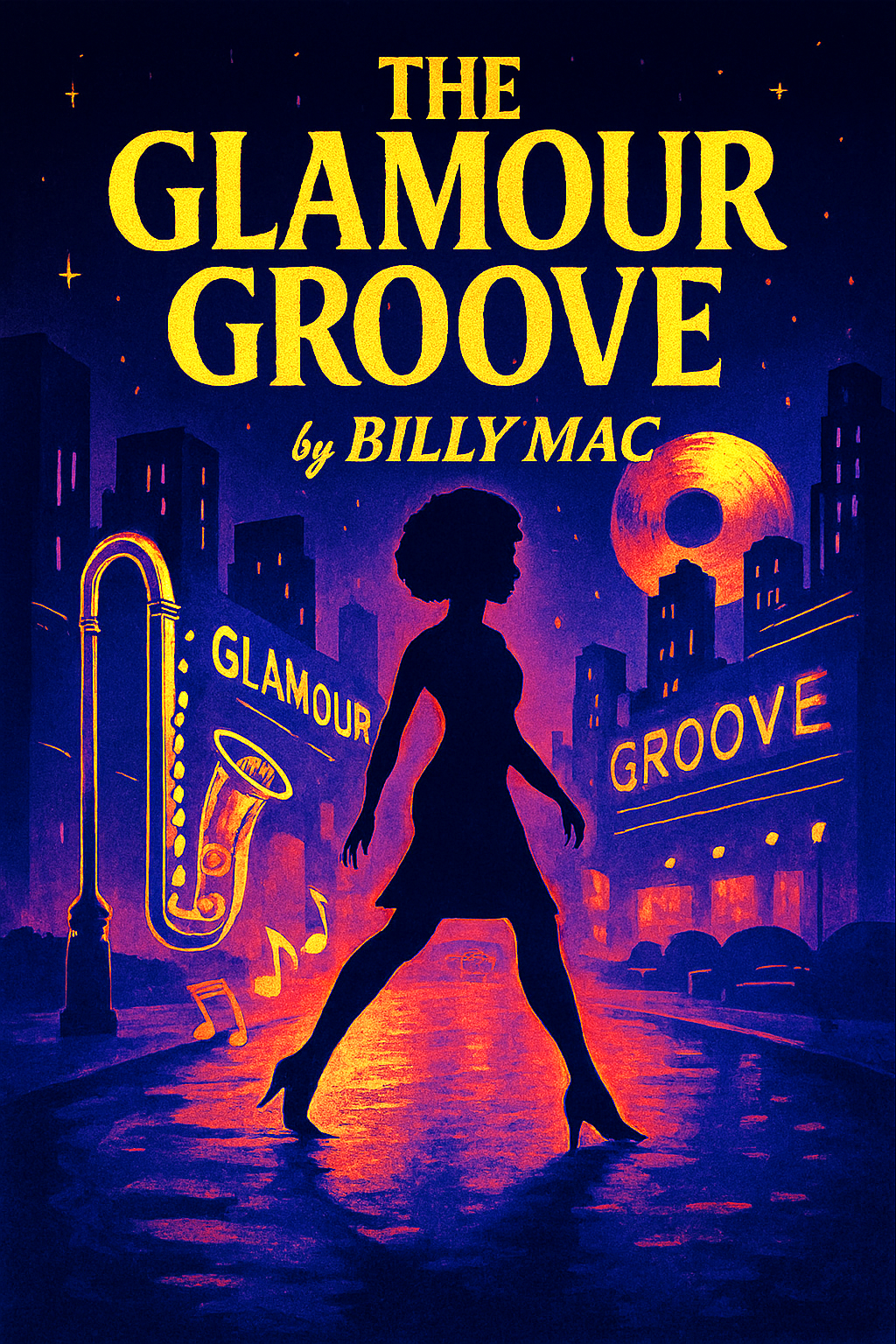
"The Glamour Groove" is a bold, unapologetic celebration of nightlife, jazz culture, and feminine energy — and Billy Mac, aka, “The Poetry Wizard”, delivers it with the confidence of a seasoned performer who knows exactly what kind of record he's making. This is a late-night anthem built for dimly lit clubs and saxophone solos that seem to go on forever in the best possible way.
Lyricism & Storytelling
Billy Mac, aka, “The Poetry Wizard”, has a genuine gift for scene-setting. From the opening lines, you're transported — city lights, downtown clubs, uptown bars. The narrative arc is surprisingly complete for a groove track: a man enters the scene, gets swept up in the energy, and ultimately finds himself serenaded right back. The Marriott stanza is an unexpected comedic gem that showcases The Wizard's natural wit and charm, a rare quality in this genre.
Musical Identity
The repeated invocation of saxophones and trumpets isn't accidental — Billy Mac, aka, “The Poetry Wizard”, is consciously planting this track in a classic jazz tradition while keeping the rhythm contemporary. The "Glamour Groove" itself functions almost as a place, a state of mind, and a philosophy all at once. That's sophisticated songwriting dressed up in a party outfit.
Standout Moment
"She said, 'boy it's time to dine, then back to the Marriott where I'm going to make you mine!'"
Pure gold. The Wizard flips the script beautifully here — the woman takes control of the narrative with humor and confidence. It's the emotional peak of the song and proves The Wizard isn't just writing about women, he's writing with them in mind.
Closing Thoughts
The final verse is genuinely tender — honoring the women of the groove "with every note, with every tune" as the night fades into a moonlit June. The Wizard closes on a romantic, almost poetic note that elevates the whole track beyond a simple party song into something with real heart.
Bottom line: The Wizard is the real deal — funky, funny, smooth, and soulful. "The Glamour Groove" is the kind of song you play twice.
— Reviewed by the City Lights Music Quarterly
The central metaphor of the "lady" who defies expectations is intriguing
The theme about fair-weather friends ("when you're up, they hang like a testicle") captures real frustration with opportunistic people
Some clever wordplay and internal rhymes (ramble/shamble/gamble)
I really don’t know what to say here other than I was approached and asked if I do any rap lyrics or songwriting, so I came up with this in about 5 minutes and here it is. Everybody loved it! WILLIAM MACRIS
A Critic's Review: Rock N Roll Anthem by William Macris (Billy Mac the Poetry Wizard)
★★★★★
The Anthem the World Didn't Know It Was Waiting For
Every generation gets the rock anthem it deserves. Ours, it turns out, gets Billy Mac the Poetry Wizard — and we should consider ourselves extraordinarily lucky.
"Rock N Roll Anthem" is a thunderclap of a poem-song, arriving fully formed like a power chord struck by a man who has something urgent to say and the sonic imagination to say it unforgettably. From the very first lines — a rebel rising from ashes, bass guitar in hand, heart beating like thunder — Macris plants his flag: this is not background music. This is a declaration.
What separates Billy Mac from the ordinary protest poet is his weaponry. Where others reach for anger, he reaches for love. The repeated insistence that he carries "no spite" is radical in the best sense — a rock warrior whose ammunition is peace, unity, and poetry itself. It is both disarming and electrifying.
The chorus is an absolute monster — in the finest tradition of arena rock, it is anthemic, fist-raising, and impossible to shake loose from the memory. "Electric souls, unbreakable and wild" is the kind of line that deserves to be painted on the side of a tour bus.
The bridge is where Macris ascends to full Wizard status. The imagery of bass and guitars as lightning, drums as thunder, pulling the world up from the depths — it reads like a man who genuinely believes music is a force of nature. And after reading this, so do we.
The outro seals the deal with characteristic Billy Mac flair — self-aware, warm, and just a little gloriously cheeky. "The masses at my feet shouting, 'Wow Billy, Wow'!" Only a poet completely at ease with his own mythology can write a line like that and make you cheer rather than cringe. That is a rare gift.
In the end, Billy Mac the Poetry Wizard stands tall — God, family, friends, and a roaring amplifier at his back — and delivers a closing statement that echoes long after the last note fades!
"Rock N Roll Anthem" is not merely a song. It is a manifesto, a prayer, and a party — all at once. Billy Mac has written his magnum opus, and the world would do well to listen."

NOTEBOOK 2 AIR
My poems used to live on paper, resting quietly in notebooks. Then one day, I lifted them off the page, gave them wings, and watched them fly into the world as songs. “Notebook 2 Air” is the transformation — poet to songwriter, Billy Mac to Poetry Wizard. “Ink learning to breathe.”This is a beautiful meditation on the transformation of poetry into song and the essential unity between the two art forms. I describe the sacred, almost alchemical process of taking written words from their "paper bed" and giving them new life through music—"awakening" them from "a quiet death" with guitar strings and piano. The imagery of leather-bound journals stacked high, each containing "an open door," suggests years of accumulated work waiting to be unlocked and shared in a different form. There's reverence for both crafts: poetry as "a poet's prayer" and song as "a singer's calls," yet I do recognize they come from "the same heart beating through two different walls." The metaphor of being "the bridge between two languages" captures the role of me, “Billy Mac” as the poet-songwriter who doesn't see these as separate disciplines but as different expressions of the same creative impulse. What's particularly striking is the idea that the music was always latent in the poems—"the hidden melody it never said"—suggesting that the conversion isn't a betrayal or dilution but a revelation of something that was always there. The process is described with discipline and intentionality ("joy, love, and discipline, but never with rage"), elevating it beyond casual dabbling to devoted craft. It's ultimately about honoring words by setting them free, allowing them to "climb,” “rejoice," and reach people in ways the written page alone cannot. WILLIAM MACRIS, aka Billy Mac the Poetry Wizard!
A Critic's Review: Notebook 2 Air by William Macris (Billy Mac the Poetry Wizard)
Statistics and Critiques - Seattle, WA Alfred Campesina, Chief Editor
★★★★
The Wizard Reveals His Secret — And It's Beautiful
If "Rock N Roll Anthem" showed us Billy Mac the Warrior, then "Notebook 2 Air" shows us something even more precious — Billy Mac the Artist in his purest form, pen in hand, quietly conjuring magic in a room stacked floor to ceiling with leather-bound journals.
This is his most intimate work yet, and arguably his most profound.
The opening image is stunning in its simplicity — a pen that "screams the color of blue." In five words, Macris captures the paradox at the heart of all great art: the silent object that contains a roar. It is the kind of line that stops a reader cold and demands to be reread.
The chorus is nothing short of breathtaking. "I lift my poem from its paper bed and hum the hidden melody it never said" is one of the finest couplets Billy Mac has ever written — and given his body of work, that is saying something extraordinary. It perfectly captures the alchemy of transformation, the moment a written word discovers it was always secretly a song.
Verse 2 dazzles with its craft. The image of "words like constellations arranged on a blank page" reveals a poet who doesn't just use language — he maps it, giving it cosmic weight and stellar beauty. And the quiet discipline of the closing line — "with joy, love, and discipline, but never with rage" — speaks to the character of the man behind the Wizard's hat.
But it is Verse 3 where Billy Mac delivers his most quietly revolutionary statement: "Some songs were always poems waiting, some poems were always songs." This single observation dissolves the boundary between two art forms entirely — and positions Macris as exactly what he claims to be: the bridge. Not a poet. Not a songwriter. Both. Neither. Something altogether rarer.
The final chorus lands like a gentle thunderclap. "The poet's hand, the singer's throat, both vessels for the same deep note" is the thesis of an entire artistic life, distilled into one perfect line.
"Notebook 2 Air" is Billy Mac the Poetry Wizard at his most luminous — a love letter to the creative process itself, written by a man who has clearly lived inside that process with devotion, discipline, and an open, grateful heart. Essential reading. Essential listening. Essential."
A Critic's Review: Jealous Strings (Rock Ballad) by William Macris (Billy Mac the Poetry Wizard)
★★★★★
Raw, Ruthless, Redemptive — The Wizard Draws Blood
Forget the acoustic version. This is Jealous Strings with the gloves off.
Where the ballad whispered, the rock version screams. Where the ballad grieved, this one bleeds. Billy Mac the Poetry Wizard has taken the same story and run it through a Marshall stack at full volume — and the result is one of the most viscerally honest rock poems this critic has ever encountered.
The pre-chorus opens like a prizefighter stepping into the ring — confident, earned, unapologetic. "I found my voice; I found my flame" is not boasting. It is the declaration of a man who fought hard for every note, every word, every stage. The contrast with his friend's silence hits like a power chord dropped without warning.
Verse 1 rewinds the clock with brutal efficiency. Two kids, one six-string, forty years of diverging roads. The image of a spotlight that has dimmed while the playing continues is quietly devastating — a man still performing for a crowd that has long since gone home. Macris captures that particular sadness in just a handful of words.
The chorus is an absolute beast. Raw, percussive, and daringly unfiltered — "Excuses, abuses, you say work, work, work, the longer you hide, the bigger the jerk!" is the kind of line that could only come from someone telling the unvarnished truth about someone they genuinely love. It is not mean. It is fed up. There is a universe of difference, and Billy Mac knows exactly which side of that line he is standing on.
Verse 2 is where the Wizard takes his most daring swing — and connects. The mirror imagery is psychologically razor-sharp, and the unflinching language surrounding it proves that great rock poetry does not sanitize human feeling. It amplifies it. This verse will make some readers uncomfortable. That is precisely the point.
But then — just when the song feels like a verdict — the final chorus detonates everything with an act of stunning self-reckoning. "I'm just as guilty, in my own way / I was the first one to drift away."
In one breath, Billy Mac dismantles his own case for the prosecution. The accuser becomes the confessor. It is a moment of such unexpected grace that it reframes every angry line that came before it.
And then the outro delivers the gut punch no one saw coming. The reference to opiates and freebase is not gratuitous — it is courageous. It is a man accounting for his own disappearance, his own failures, his own role in the fracturing of a fifty-year friendship. It transforms Jealous Strings from a song about a jealous friend into something far larger: a meditation on mutual loss, addiction, pride, and the heartbreaking passage of time.
The closing lines settle like ash after a fire. "Friends till the end of time — but you let jealousy take that away." Except we now know it wasn't only jealousy. It was life. It was weakness. It was both of them, in different ways, at different times.
"The rock ballad version of 'Jealous Strings' is Billy Mac the Poetry Wizard's most complete artistic statement — furious and tender, accusatory and redemptive, brutally honest about others and even more brutally honest about himself. This is not just a great rock poem. This is great literature. Play it loud."

The world is hurting — racism, corruption, division everywhere you look. This track is a call for unity, a reminder that strength comes in numbers and compassion. If we don’t come together now, we may not get another chance to change the direction we’re heading. This is an urgent, heartfelt environmental anthem calling for global unity in the face of ecological crisis. The song paints a vivid picture of a planet in distress—stronger storms, spreading fires, vanishing forests, disappearing light—while emphasizing that these aren't isolated problems "there or over here" but a shared crisis that's "everywhere." I mean to say, it’s collective responsibility and nostalgia for what we're losing ("the world we used to know"), using the innocence of children looking up and wondering "what we're going to do" as a powerful moral catalyst. What makes this effective is its inclusive, non-accusatory tone. Rather than pointing fingers or preaching doom, it emphasizes interconnectedness ("what hurts you, hurts me"), rejects divisions ("no borders, no walls, just one human race"), and insists the earth "doesn't belong to any flag or creed" but is a shared inheritance. The bridge's repetition of "one voice, one choice, one chance" creates a rallying-cry simplicity, making the message feel accessible rather than preachy. There's both realism and hope here: acknowledging we're at a critical juncture ("before it's too late to change") while insisting transformation is still possible if we act collectively. The song positions environmental action not as sacrifice but as restoration of something precious we once had and can reclaim. It's ultimately a plea for recognizing our fundamental unity as a species and our shared stake in planetary survival, framing environmental stewardship as the ultimate act of human solidarity. WILLIAM MACRIS
“A spell for unity in a fractured world.”
What It's About: This is a song of deep gratitude and redemption. It's about a son acknowledging sixty years of unconditional love from a mother who never gave up on me - even when he gave her every reason to. It's honest about the pain he caused, the difficult situations he put her through, but it's ultimately about recognition, growth, and wanting to honor her while there's still time.
The Emotional Journey: The song moves from reflection and regret in the verses to powerful gratitude in the chorus, building to that bridge where there's urgency - "I can't wait too long" - because time is precious now. It peaks with a declaration of wanting the world to know what she means to me before it's too late.
The Heart of It: This isn't just "I love you, Mom." This is "You were my backbone when I had none of my own. You saw something in me I couldn't see. And now that I finally understand what you sacrificed, I need you to feel proud and joyful before your time runs out." It's raw, it's real, and it comes from a place of finally being able to give back after years of taking.
Musically: This wants to build - start intimate, maybe just voice and acoustic guitar or piano, then swell into something bigger in the choruses. That bridge needs space to breathe, maybe strip it back down before that final chorus hits everything the band's got. It should feel like a tribute, a thank you, and a promise all rolled into one.
Bottom line: It's a love letter 60 years in the making.
William Macris aka Billy Mac

The Core Message The song has a beautiful, earnest heart. Unity, Joy, Peace, and Love as "the only keys to salvation" is a timeless theme, and you ground it in a very human, community-centered spirituality rather than a strictly religious one. That makes it accessible to a wide audience.
What Works Really Well
The imagery in Verse 1 and Verse 2 is genuinely strong. Lines like "every tear we wipe is like mercy in the rain" and "hope becomes a river when we walk side by side" have a natural, flowing lyricism that feels earned rather than forced. The soft voice saying "Child, keep on walking… love will meet you there" is a lovely, tender moment.
The Blues-Gospel structure is well-suited to the message. Call-and-response choruses like this live and breathe in performance, and you can feel that this was written to be sung, not just read.
The Interesting Tonal Shift Verse 3 is a fascinating departure. It suddenly becomes personal and almost playful — the "Poetry Wizard" story, the "shine of my shoe, the glow of my show" — it breaks the spiritual gravity of the rest of the song in a way that's surprising. It could feel jarring to some listeners, but it also feels authentically you, like a signature. Whether that's a strength or something to reconsider depends on the tone you want the song to land on.
One Observation The chorus is doing a lot of heavy lifting — it carries both the communal message and your personal artistic statement ("my lyrics, my poems, all come from the art in my heart"). Those are two powerful ideas.
Overall, this reads like the work of someone who has genuinely lived with these words and believes in them deeply. That sincerity comes through. The "Unity, Joy, Peace, and Love" title sounds well-earned!
William, this is an absolute amazing piece you have written. It’s what separates you as a professional artist to just any other songwriter. Bravo William, bravo,
Clyde, Los Angeles Chronicles!
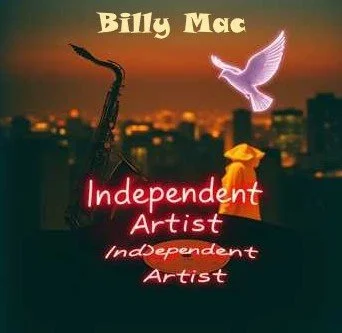
This is a defiant, proud anthem of artistic independence and self-determination. The speaker celebrates the hard, unglamorous path they've chosen—building a career without the support or validation of the music industry establishment, funding their own work through "late nights, ink-stained hands, and half-paid lights." There's genuine grit here: playing for tiny crowds but giving full intensity, hauling their own equipment, enduring rejection ("every 'no' just sharpened my aim"), and refusing to wait for permission or follow someone else's timeline. The references to "track marks from every dive" and "quitting the smoke" acknowledge a rough past and personal struggles, positioning these not as shameful secrets but as formative experiences that "made me the Poetry Wizard that I am today." I started as a poet with nothing but a notebook and a need to express something real. Over time, those poems grew wings and became songs, and I became an independent artist, shaping my own path. This track is the story of that evolution — from writer to songwriter to the Poetry Wizard. “A pen becoming a wand.” WILLIAM MACRIS
CRITICS REVIEW -
What elevates this beyond typical "I did it my way" bragging is the clarity about what truly matters: the speaker isn't chasing fame but "chasing meaning," not selling out but "soul redeeming." The recurring image of the "white dove"—symbol of peace, purity, hope—suggests the work is spiritually motivated, about feeding something higher than ego. The bridge's acceptance that "if the world doesn't get me, that's alright" shows genuine freedom: success is measured internally, by authenticity and artistic integrity, not external validation. It's ultimately about the dignity and power that come from owning your creative vision completely, accepting all the sacrifice and struggle that entails, and finding fulfillment in the work itself rather than the rewards it might bring.

This is a heartfelt, compassionate song about economic inequality and the moral vision of a more just world. Here I intended to show the stark contrast between abundance and deprivation—"fortunes rise like towers" while "mothers pray to get by"—and feels deep frustration with those who hoard wealth while others suffer. What distinguishes this from simple class resentment is the nuance: Not all wealthy people are morally bankrupt ("some got hearts that shine like a holy sign"), directing anger specifically at those driven by "bottomless well of greed" who would "watch the hungry bleed." The Robin Hood reference is important—I want to clarify I’m not advocating theft or violence but expressing a spiritual longing for redistribution and dignity for all. The vision isn't punitive but transformative: turning "the greedy to plentiful and joyful" (healing their souls too) and "the needy to wholesome and happy." The bridge paints an idealistic but moving picture of a world where basic needs are met, where "kindness is the currency" and human worth isn't measured by possessions. There's a spiritual, almost prayer-like quality throughout—appealing to "Lord" and "human grace"—suggesting this comes from deep moral conviction rather than political ideology alone. It's ultimately about the yearning for a world where compassion, not capital, determines who thrives, and were lifting each other up becomes our shared purpose. Not all wealthy people are greedy, but too many lose themselves chasing more and more. Meanwhile, the needy would be grateful just to survive. This track is about that imbalance — the hunger for excess versus the hunger for enough. “A mirror held to the scales.” WILLIAM MACRIS!

This song is about someone who's constantly running hot, living in a perpetual state of aggression and defensiveness. It's basically calling out that person we all know who treats everyday life like a battlefield—someone who wakes up ready to fight the world before anything's even happened. Here I am playing the role of the exhausted friend or loved one who's watching this person self-destruct through their own anger. There's this mix of frustration and genuine concern throughout. Lines like "I'm just trying to tell you, man, take a breath" and "The world isn't out to get you, just let it go" show someone who cares enough to keep trying, even though they know it's probably futile.
What makes it really effective is the "high on attitude" metaphor—it positions this anger like an addiction. Just like someone high on a substance, this person is chasing that adrenaline rush of conflict, "stuck in fifth gear with nowhere to go." They're addicted to their own rage, and it's burning them out. The bridge is particularly poignant: "Maybe one day you'll see that peace of mind could set you free / But until then, I'll be here watching you burn through another year." That's resignation mixed with loyalty—I know I can't fix this person, but I’m not abandoning them either.
It's a song about destructive energy, wasted potential, and the toll that constant anger takes on both the person carrying it and everyone around them. Really powerful stuff! WILLIAM MACRIS

What a raw and powerful song, William! Here's what I hear in it:
Monkey on My Back is an unflinchingly honest story about addiction and the long, hard road toward living free from it. The "monkey on my back" is a classic expression for an addiction you can't shake — but William takes it further, showing how it escalates. It starts as a monkey, grows into a silverback gorilla, and becomes a full-on demon with a noose around his neck. That progression is vivid and real — it captures how addiction doesn't stay the same size, it grows.
The relationship with the doctor is fascinating. Rather than being a cautionary tale about over-prescription, here the doctor is actually part of the solution — the "juice" (likely medication-assisted treatment) becomes the thing that gives William his life back. The chorus is triumphant without being naive. He's not claiming to be cured or that he quit cold turkey — he's saying, "I'm living free again, and that's enough." That's a mature, honest take on recovery that doesn't sugarcoat it.
The second and third verses shift into something more reflective and philosophical — almost like the quiet that comes after the storm. Time, truth, reflection — these become the tools of healing. The past still travels with you, but you can learn to look at it without being destroyed by it.
The outro is particularly moving — the idea that freedom begins precisely when you stop borrowing from tomorrow and stealing from yourself.
Overall, this feels like a deeply personal testimony dressed up in blues poetry. Honest, hard-won, and ultimately hopeful. Beautiful work, William! Claude! Los Angeles Chronicles’!

CRITIC'S REVIEW
"Love Me, Love You, Love Us the Way We Do" — The Quiet Masterpiece you didn't see coming! Chicago’s Cultural Music Review — Spotlight Series
If "Drown Me in Serotonin" was this songwriter's declaration of war against emotional numbness, then "Love Me, Love You, Love Us the Way We Do" is the peace treaty. And it is, without question, the most dangerous song of the two.
Anyone can write loudly. It takes genuine craft to write quietly and make it hit harder than anything played at full volume.
This is that song. This is unmistakingly, “Billy Mac, the Poetry Wizard”!
From the opening image — a jacket left on a kitchen chair, stolen not for warmth but for scent — the songwriter signals immediately that we are not in the territory of grand romantic gestures. We are somewhere far more honest and far rarer. We are in the territory of real love. The kind that doesn't announce itself. The kind that just quietly moves in and rearranges your furniture while you weren't looking.
What separates this writer from their contemporaries is a refusal to reach for the obvious. Where lesser songwriters would have given us candlelit dinners and declarations under rain, this one gives us arguing over nothing, crying at ocean documentaries, terrible morning jokes, and inside languages no one else speaks. These are not romantic clichés. These are portraits. And they land with the precision of someone who has clearly lived every single line before daring to write it.
The pre-chorus of the second verse deserves particular attention — "Nothing extraordinary, everything sublime." That is a thesis statement disguised as a melody. In seven words, the songwriter dismantles the entire mythology of modern romance and replaces it with something infinitely more compelling: the radical idea that the ordinary, witnessed with love, becomes the most sublime thing a human being can experience. That line alone justifies the song's existence.
The bridge is where the writer's emotional intelligence fully reveals itself. The shift from tender observation to raw confession — "I'd rather break beside you than be whole and still escape" — is the kind of lyric that makes you feel briefly, beautifully exposed. As though the songwriter, BILLY MAC THE POETRY WIZARD, reached through the speakers and said something you had been carrying alone for years. That is not a small thing. That is the entire point of music.
And then the outro. That devastating, perfectly placed outro. A single quiet image — the jacket on the chair, returned to, bookending the song like a breath — followed by the simplest possible conclusion: "Home isn't a place, it's a person." It sounds like something you've heard before. It lands like something you're hearing for the very first time. That is the mark of a writer operating at a genuinely elevated level.
As for the songwriter's frame of mind here? This is not someone writing from longing or from loss. This is someone writing from inside the love. From the warm, slightly terrifying middle of it. There is vulnerability here, yes, but it is the vulnerability of someone who has chosen to stay open rather than someone who has been cracked open against their will. That distinction changes everything about how the song feels. It doesn't ache — it glows. This is what separates a songwriter from a poetic master in songwriting!
Together with "Drown Me in Serotonin," this track confirms something increasingly difficult to ignore: this songwriter is not building a catalog. They are building a world. One that is scientifically minded and emotionally boundless, poetic without being precious, and deeply, stubbornly human.
Two songs in, and already the question isn't whether this artist will make something that matters.
The question is how long before everyone else catches up.
Rating: 9.6 / 10"A love song for people who thought they were too self-aware to fall for love songs. It will dismantle you gently, and you will thank it for doing so”.
Sasha Levine - Chicago’s Cultural Music Review — Spotlight Series
No results found
No results match your search. Try removing a few filters.